Lexical choice is the subtask of Natural language generation that involves choosing the content words (nouns, non-auxiliary verbs, adjectives, and adverbs) in a generated text. Function words (determiners, for example) are usually chosen during realisation. == Examples == The simplest type of lexical choice involves mapping a domain concept (perhaps represented in an ontology) to a word. For example, the concept Finger might be mapped to the word finger. A more complex situation is when a domain concept is expressed using different words in different situations. For example, the domain concept Value-Change can be expressed in many ways: The temperature rose: the verb rose is used for a Value-Change in temperature which increases the value. The temperature fell: the verb fell is used for a Value-Change in temperature which decreases the value. The rain got heavier: the phrase got heavier is used for a Value-Change in precipitation amount when the precipitation is rain. Sometimes words can communicate additional contextual information, for example: The temperature plummeted: the verb plummeted is used for a Value-Change in temperature which decreases the value, when the change is rapid and large. Contextual information is especially significant for vague terms such as tall. For example, a 2m tall man is tall, but a 2m tall horse is small. == Linguistic perspective == Lexical choice modules must be informed by linguistic knowledge of how the system's input data maps onto words. This is a question of semantics, but it is also influenced by syntactic factors (such as collocation effects) and pragmatic factors (such as context). Hence NLG systems need linguistic models of how meaning is mapped to words in the target domain (genre) of the NLG system. Genre tends to be very important; for example the verb veer has a very specific meaning in weather forecasts (wind direction is changing in a clockwise direction) which it does not have in general English, and a weather-forecast generator must be aware of this genre-specific meaning. In some cases there are major differences in how different people use the same word; for example, some people use by evening to mean 6PM and others use it to mean midnight. Psycholinguists have shown that when people speak to each other, they agree on a common interpretation via lexical alignment; this is not something which NLG systems can yet do. Ultimately, lexical choice must deal with the fundamental issue of how language relates to the non-linguistic world. For example, a system which chose colour terms such as red to describe objects in a digital image would need to know which RGB pixel values could generally be described as red; how this was influenced by visual (lighting, other objects in the scene) and linguistic (other objects being discussed) context; what pragmatic connotations were associated with red (for example, when an apple is called red, it is assumed to be ripe as well as have the colour red); and so forth. == Algorithms and models == A number of algorithms and models have been developed for lexical choice in the research community, for example Edmonds developed a model for choosing between near-synonyms (words with similar core meanings but different connotations). However such algorithms and models have not been widely used in applied NLG systems; such systems have instead often used quite simple computational models, and invested development effort in linguistic analysis instead of algorithm development.
Camfecting
In computer security, camfecting is the process of attempting to hack into a person's webcam and activate it without the webcam owner's permission. The remotely activated webcam can be used to watch anything within the webcam's field of vision, sometimes including the webcam owner themselves. Camfecting is most often carried out by infecting the victim's computer with a virus that can provide the hacker access to their webcam. This attack is specifically targeted at the victim's webcam, and hence the name camfecting, a portmanteau of the words camera and infecting. Typically, a webcam hacker or a camfecter sends his victim an innocent-looking application which has a hidden Trojan software through which the camfecter can control the victim's webcam. The camfecter virus installs itself silently when the victim runs the original application. Once installed, the camfecter can turn on the webcam and capture pictures/videos. The camfecter software works just like the original webcam software present in the victim computer, the only difference being that the camfecter controls the software instead of the webcam's owner. == Notable cases == Marcus Thomas, former assistant director of the FBI's Operational Technology Division in Quantico, said in a 2013 story in The Washington Post that the FBI had been able to covertly activate a computer's camera—without triggering the light that lets users know it is recording—for several years. In November 2013, American teenager Jared James Abrahams pleaded guilty to hacking over 100-150 women and installing the highly invasive malware Blackshades on their computers in order to obtain nude images and videos of them. One of his victims was Miss Teen USA 2013 Cassidy Wolf. Researchers from Johns Hopkins University have shown how to covertly capture images from the iSight camera on MacBook and iMac models released before 2008, by reprogramming the microcontroller's firmware. == Prevention == A computer that does not have an up-to-date webcam software or any anti-virus (or firewall) software installed and operational may be at increased risk for camfecting from different types of malware. Softcams may nominally increase this risk, if not maintained or configured properly. Although a person cannot protect themselves from zero-day exploits that could potentially activate a camera unknowingly, such as Pegasus is able to do on smartphones. The only way to truly avoid being watched through your own camera is by blocking it physically, since software blocks can be overriden by advanced persistent threats. A simple piece of tape is more commonly used to offuscate the feed of the camera. With even Mark Zuckerberg doing so on his personal laptop that appeared during a presentation. And it being the way Snowden, an ex-contractor for the NSA, is portrayed to do so to prevent camfecting in the biopic Snowden. There is now a market for the manufacture and sale of sliding lens covers that allow users to physically block their computer's camera and, in some cases, microphone. A number of phone and laptop manufacturers tried to implement pop-up cameras that can only be opened manually by the user. But the trend did not become mainstream because of the engineering it took to keep the mechanisms up to date, aswell as the fragility and durability of the cameras.
Influencer
An influencer is an individual who has the capacity to shape the attitudes, behavior, or decisions of others through authority, knowledge, position, or the nature of the relationship with the audience. The term is used in various fields such as media, business, politics, religion, and communication, referring to influencers such as social media influencers, podcasters, public speakers, religious influencers, writers, and newsletter writers etc who have dedicated followings in various areas. One writer defines influencers as "a range of third parties who exercise influence over the organization and its potential customers." Another writer defines an influencer as a "third party who significantly shapes the customer's purchasing decision but may never be accountable for it." According to another writer, influencers are "well-connected, create an impact, have active minds, and are trendsetters". Just because a person has many followers does not necessarily mean they have much influence over those people. In contemporary usage, the term frequently refers to a social media influencer, (also known as an online influencer or simply influencer) a person who builds a grassroots online presence through engaging content such as photos, videos, and updates. This is done by using direct audience interaction to establish authenticity, expertise, and appeal, and by standing apart from traditional celebrities by growing their platform through social media rather than pre-existing fame. The modern referent of the term is commonly a paid role in which a business entity pays for the social media influence-for-hire activity to promote its products and services, known as influencer marketing. A 1% increase in spending on influencer marketing can lead to a 0.5% increase in audience engagement. As such, an influencer effectively acts as a modern salesperson or a marketer. Types of influencers include fashion influencer, travel influencer, and virtual influencer, and they involve content creators and streamers. Some influencers are associated primarily with specific social media apps such as TikTok, Instagram, or Pinterest; many influencers are also considered internet celebrities. As of 2023, Instagram is the social media platform businesses spend the most advertising money towards marketing with influencers. However, influencers can have an impact on any social media network. == History == === Origins === The word influencer in its general sense of a person or thing that exerts influence, is attested in historical sources at least since the 17th century. The Oxford English Dictionary (OED) gives 1664 as the earliest example of usage and cites a sentence from Henry More's A Modest Enquiry into the Mystery of Iniquity: "The head and influencer of the whole Church". The origins of online influencing can be traced back to the emergence of digital blogs and platforms in the early 2000s. Nevertheless, recent studies demonstrate that Instagram, an application with more than one billion users, harbors the majority of the influencer demographic. These individuals are sometimes referred to as "Instagrammers" or "Instafamous". A crucial aspect of influencing is their association with sponsors. The 2015 debut of Vamp, a company that links influencers with sponsorships, transformed the landscape of influencing. There is much debate about whether social media influencers can be considered celebrities, as their path to fame is often less traditional and arguably easier. Melody Nouri addressed the differences between the two types in her article "The Power of Influence: Traditional Celebrities vs Social Media Influencer". Nouri asserts that social media platforms have a greater negative impact on young, impressionable audiences in comparison with traditional media such as magazines, billboards, advertisements, and tabloids featuring celebrities. Online, it is thought to be simpler to manipulate an image and lifestyle in such a way that viewers are more susceptible to believing it. One theory considers the former American First Lady Eleanor Roosevelt (1884–1962) to be the "original media influencer." While she achieved celebrity in her role as First Lady, she built a global personal brand as a wise, informative, trustworthy American woman. Her voice was her own, unrestricted by political advisors and powerful men, and with it, Roosevelt exerted unprecedented social and cultural influence in radio, print, public speaking, film, and television until she died. In one notable example, it may have been Roosevelt's television support of John F. Kennedy which nudged his "hairline victory" during the 1960 Presidential campaign. In another example, David Ogilvy paid Roosevelt more than a quarter of a million dollars in today's currency to make a TV commercial for Good Luck margarine (1959), in which Roosevelt also managed to mention world hunger. As a content creator, she wrote My Day, a popular daily newspaper column that ran nationwide for twenty-six years. Like a social media post, My Day covered all aspects of her life, and in it Roosevelt often recommended movies, books, and products that she admired. Roosevelt also had a hand in designing all three of her public affairs television shows. Unlike contemporary influencers, she was less motivated by a pay-to-play situation than by a desire to educate and inspire; but she did use her influence to benefit the entertainment industry careers of her children, and she welcomed the revenue that her influence bought, most of which was donated to charity. === 2000s === The early 2000s showed corporate endeavors to leverage the internet for influence, with some companies participating in forums for promotions or providing bloggers with complimentary products in return for favorable reviews. A few of these practices were viewed as unethical for taking advantage of the labor of young individuals without providing remuneration. In 2004, The Blogstar Network was established by Ted Murphy of MindComet. Bloggers were encouraged to join an email list and receive remunerated offers from corporations in exchange for creating specific posts. For instance, bloggers were compensated for writing reviews of fast-food meals on their blogs. Blogstar is widely regarded as the first influencer marketing network. Murphy succeeded Blogstar with PayPerPost, which was introduced in 2006. This platform compensated significant posters on prominent forums and social media platforms for every post made about a corporate product. Payment rates were determined by the influencer's status. Though very popular, PayPerPost, received a great deal of criticism as these influencers were not required to disclose their involvement with PayPerPost as traditional journalism would have. With the success of PayPerPost, the public became aware that there was a drive for corporate interests to influence what some people were posting to these sites. The platform also incentivized other firms to establish comparable programs. Despite concerns, marketing networks with influencers continued to grow throughout the 2000s and into the 2010s. The influencer marketing industry was worth as much as $8 billion in 2019, according to estimates from Business Insider Intelligence, which are based on Mediakix data. Evan Asano, the Former CEO and founder of the agency Mediakix, previously spoke with Business Insider and said he believed influencer marketing on Instagram would continue to grow despite likes being hidden. === 2010s === By the 2010s, the term "influencer" described digital content creators with a large following, distinctive brand persona, and a patterned relationship with commercial sponsors. By this period, influencer marketing had become a widely researched field globally, with systematic reviews drawing on hundreds of studies that documented the growing role of authenticity, audience engagement, and parasocial relationships in shaping how consumers responded to influencer content across different markets. During this period, influencer culture also developed through distinct channels outside Western markets. In South Korea, the global spread of Korean pop culture, also called K-Pop, through platforms such as YouTube, Facebook, and Twitter gave rise to what scholars have called 'Hallyu 2.0' or the 'New Korean Wave', where fans throughout Southeast Asia, North America, Latin America, and Europe shared, subtitled, and redistributed Korean music and film content on a large scale. This helped Korean entertainers to build substantial followings internationally. Consumers often mistakenly view celebrities as reliable, leading to trust and confidence in the products being promoted. A 2001 study from Rutgers University discovered that individuals were using "internet forums as influential sources of consumer information." The study proposes that consumers preferred internet forums and social media when making purchasing decisions over conventional advertising and print sources. An in
InfiniBand
InfiniBand (IB) is a computer networking standard used in high-performance computing that features very high throughput and very low latency. It is used for data interconnect both among and within computers. InfiniBand is also used as either a direct or switched interconnect between servers and storage systems, as well as an interconnect between storage systems. It is designed to be scalable and uses a switched fabric network topology. Between 2014 and June 2016, it was the most commonly used interconnect in the TOP500 list of supercomputers. Mellanox (acquired by Nvidia) manufactures InfiniBand host bus adapters and network switches, which are used by large computer system and database vendors in their product lines. As a computer cluster interconnect, IB competes with Ethernet, Fibre Channel, and Intel Omni-Path. The technology is promoted by the InfiniBand Trade Association. == History == InfiniBand originated in 1999 from the merger of two competing designs: Future I/O and Next Generation I/O (NGIO). NGIO was led by Intel, with a specification released in 1998, and joined by Sun Microsystems and Dell. Future I/O was backed by Compaq, IBM, and Hewlett-Packard. This led to the formation of the InfiniBand Trade Association (IBTA), which included both sets of hardware vendors as well as software vendors such as Microsoft. At the time it was thought some of the more powerful computers were approaching the interconnect bottleneck of the PCI bus, in spite of upgrades like PCI-X. Version 1.0 of the InfiniBand Architecture Specification was released in 2000. Initially the IBTA vision for IB was simultaneously a replacement for PCI in I/O, Ethernet in the machine room, cluster interconnect and Fibre Channel. IBTA also envisaged decomposing server hardware on an IB fabric. Mellanox had been founded in 1999 to develop NGIO technology, but by 2001 shipped an InfiniBand product line called InfiniBridge at 10 Gbit/second speeds. Following the burst of the dot-com bubble there was hesitation in the industry to invest in such a far-reaching technology jump. By 2002, Intel announced that instead of shipping IB integrated circuits ("chips"), it would focus on developing PCI Express, and Microsoft discontinued IB development in favor of extending Ethernet. Sun Microsystems and Hitachi continued to support IB. In 2003, the System X supercomputer built at Virginia Tech used InfiniBand in what was estimated to be the third largest computer in the world at the time. The OpenIB Alliance (later renamed OpenFabrics Alliance) was founded in 2004 to develop an open set of software for the Linux kernel. By February, 2005, the support was accepted into the 2.6.11 Linux kernel. In November 2005 storage devices finally were released using InfiniBand from vendors such as Engenio. Cisco, desiring to keep technology superior to Ethernet off the market, adopted a "buy to kill" strategy. Cisco successfully killed InfiniBand switching companies such as Topspin via acquisition. Of the top 500 supercomputers in 2009, Gigabit Ethernet was the internal interconnect technology in 259 installations, compared with 181 using InfiniBand. In 2010, market leaders Mellanox and Voltaire merged, leaving just one other IB vendor, QLogic, primarily a Fibre Channel vendor. At the 2011 International Supercomputing Conference, links running at about 56 gigabits per second (known as FDR, see below), were announced and demonstrated by connecting booths in the trade show. In 2012, Intel acquired QLogic's InfiniBand technology, leaving only one independent supplier. By 2014, InfiniBand was the most popular internal connection technology for supercomputers, although within two years, 10 Gigabit Ethernet started displacing it. In 2016, it was reported that Oracle Corporation (an investor in Mellanox) might engineer its own InfiniBand hardware. In 2019 Nvidia acquired Mellanox, the last independent supplier of InfiniBand products. == Specification == Specifications are published by the InfiniBand trade association. === Performance === Original names for speeds were single-data rate (SDR), double-data rate (DDR) and quad-data rate (QDR) as given below. Subsequently, other three-letter initialisms were added for even higher data rates. Notes Each link is duplex. Links can be aggregated: most systems use a 4 link/lane connector (QSFP). HDR often makes use of 2x links (aka HDR100, 100 Gb link using 2 lanes of HDR, while still using a QSFP connector). NDR introduced OSFP connectors which host one or two links at 2x (NDR200) or 4x (NDR400). They are not logically configured as a single 8x link, even when connecting switches together with an OSFP cable. InfiniBand provides remote direct memory access (RDMA) capabilities for low CPU overhead. === Topology === InfiniBand uses a switched fabric topology, as opposed to early shared medium Ethernet. All transmissions begin or end at a channel adapter. Each processor contains a host channel adapter (HCA) and each peripheral has a target channel adapter (TCA). These adapters can also exchange information for security or quality of service (QoS). === Messages === InfiniBand transmits data in packets of up to 4 KB that are taken together to form a message. A message can be: a remote direct memory access read or write a channel send or receive a transaction-based operation (that can be reversed) a multicast transmission an atomic operation === Physical interconnection === In addition to a board form factor connection, it can use both active and passive copper (up to 10 meters) and optical fiber cable (up to 10 km). QSFP connectors are used. The InfiniBand Association also specified the CXP connector system for speeds up to 120 Gbit/s over copper, active optical cables, and optical transceivers using parallel multi-mode fiber cables with 24-fiber MPO connectors. === Software interfaces === Mellanox operating system support is available for Solaris, FreeBSD, Red Hat Enterprise Linux, SUSE Linux Enterprise Server (SLES), Windows, HP-UX, VMware ESX, and AIX. InfiniBand has no specific standard application programming interface (API). The standard only lists a set of verbs such as ibv_open_device or ibv_post_send, which are abstract representations of functions or methods that must exist. The syntax of these functions is left to the vendors. Sometimes for reference this is called the verbs API. The de facto standard software is developed by OpenFabrics Alliance and called the Open Fabrics Enterprise Distribution (OFED). It is released under two licenses GPL2 or BSD license for Linux and FreeBSD, and as Mellanox OFED for Windows (product names: WinOF / WinOF-2; attributed as host controller driver for matching specific ConnectX 3 to 5 devices) under a choice of BSD license for Windows. It has been adopted by most of the InfiniBand vendors, for Linux, FreeBSD, and Microsoft Windows. IBM refers to a software library called libibverbs, for its AIX operating system, as well as "AIX InfiniBand verbs". The Linux kernel support was integrated in 2005 into the kernel version 2.6.11. === Ethernet over InfiniBand === Ethernet over InfiniBand, abbreviated to EoIB, is an Ethernet implementation over the InfiniBand protocol and connector technology. EoIB enables multiple Ethernet bandwidths varying on the InfiniBand (IB) version. Ethernet's implementation of the Internet Protocol Suite, usually referred to as TCP/IP, is different in some details compared to the direct InfiniBand protocol in IP over IB (IPoIB).
Hybrid cryptosystem
In cryptography, a hybrid cryptosystem is one which combines the convenience of a public-key cryptosystem with the efficiency of a symmetric-key cryptosystem. Public-key cryptosystems are convenient in that they do not require the sender and receiver to share a common secret in order to communicate securely. However, they often rely on complicated mathematical computations and are thus generally much more inefficient than comparable symmetric-key cryptosystems. In many applications, the high cost of encrypting long messages in a public-key cryptosystem can be prohibitive. This is addressed by hybrid systems by using a combination of both. A hybrid cryptosystem can be constructed using any two separate cryptosystems: a key encapsulation mechanism, which is a public-key cryptosystem a data encapsulation scheme, which is a symmetric-key cryptosystem The hybrid cryptosystem is itself a public-key system, whose public and private keys are the same as in the key encapsulation scheme. Note that for very long messages the bulk of the work in encryption/decryption is done by the more efficient symmetric-key scheme, while the inefficient public-key scheme is used only to encrypt/decrypt a short key value. == Implementations and standards == All practical implementations of public key cryptography today employ a hybrid system. Examples include the TLS protocol and the SSH protocol, that use a public-key mechanism for key exchange (such as Diffie-Hellman) and a symmetric-key mechanism for data encapsulation (such as AES). The OpenPGP file format and the PKCS#7 file format are other examples. Hybrid Public Key Encryption (HPKE, published as RFC 9180) is a modern standard for generic hybrid encryption. HPKE is used within multiple IETF protocols, including Messaging Layer Security (MLS), Oblivious DNS over HTTPS, Oblivious HTTP, Privacy Preserving Measurement, and TLS Encrypted Client Hello. Envelope encryption is an example of a usage of hybrid cryptosystems in cloud computing. In a cloud context, hybrid cryptosystems also enable centralized key management. == Example == To encrypt a message addressed to Alice in a hybrid cryptosystem, Bob does the following: Obtains Alice's public key. Generates a fresh symmetric key for the data encapsulation scheme. Encrypts the message under the data encapsulation scheme, using the symmetric key just generated. Encrypts the symmetric key under the key encapsulation scheme, using Alice's public key. Sends both of these ciphertexts to Alice. To decrypt this hybrid ciphertext, Alice does the following: Uses her private key to decrypt the symmetric key contained in the key encapsulation segment. Uses this symmetric key to decrypt the message contained in the data encapsulation segment. == Security == If both the key encapsulation and data encapsulation schemes in a hybrid cryptosystem are secure against adaptive chosen ciphertext attacks, then the hybrid scheme inherits that property as well. However, it is possible to construct a hybrid scheme secure against adaptive chosen ciphertext attacks even if the key encapsulation has a slightly weakened security definition (though the security of the data encapsulation must be slightly stronger). == Envelope encryption == Envelope encryption is term used for encrypting with a hybrid cryptosystem used by all major cloud service providers, often as part of a centralized key management system in cloud computing. Envelope encryption gives names to the keys used in hybrid encryption: Data Encryption Keys (abbreviated DEK, and used to encrypt data) and Key Encryption Keys (abbreviated KEK, and used to encrypt the DEKs). In a cloud environment, encryption with envelope encryption involves generating a DEK locally, encrypting one's data using the DEK, and then issuing a request to wrap (encrypt) the DEK with a KEK stored in a potentially more secure service. Then, this wrapped DEK and encrypted message constitute a ciphertext for the scheme. To decrypt a ciphertext, the wrapped DEK is unwrapped (decrypted) via a call to a service, and then the unwrapped DEK is used to decrypt the encrypted message. In addition to the normal advantages of a hybrid cryptosystem, using asymmetric encryption for the KEK in a cloud context provides easier key management and separation of roles, but can be slower. In cloud systems, such as Google Cloud Platform and Amazon Web Services, a key management system (KMS) can be available as a service. In some cases, the key management system will store keys in hardware security modules, which are hardware systems that protect keys with hardware features like intrusion resistance. This means that KEKs can also be more secure because they are stored on secure specialized hardware. Envelope encryption makes centralized key management easier because a centralized key management system only needs to store KEKs, which occupy less space, and requests to the KMS only involve sending wrapped and unwrapped DEKs, which use less bandwidth than transmitting entire messages. Since one KEK can be used to encrypt many DEKs, this also allows for less storage space to be used in the KMS. This also allows for centralized auditing and access control at one point of access.
CloudMinds
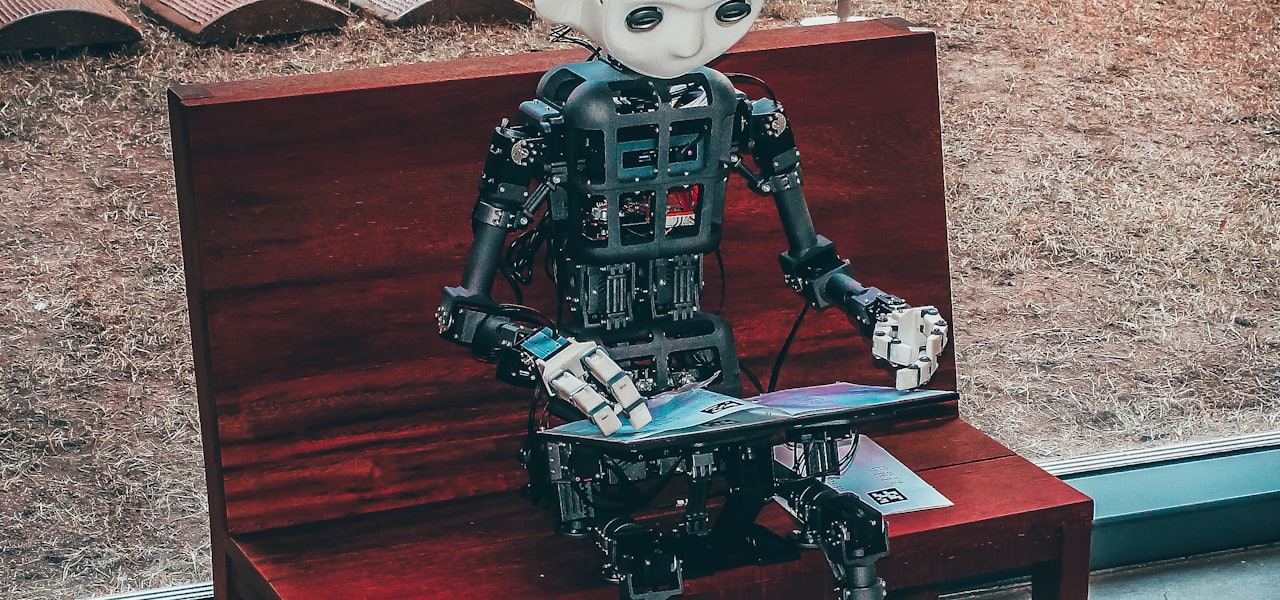
CloudMinds is an operator of cloud-based systems for cognitive robotics. == History == CloudMinds was founded in 2015 and is backed by SoftBank, Foxconn, Walden Venture Investments, and Keytone Ventures. CloudMinds has developed research in smart devices, robot control, high-speed security networks, and cloud intelligence integration. CloudMinds developed the Mobile Intranet Cloud Services (MCS) based on these technologies in order to increase the information security of the cloud robot remote control. The technology has been applied in the fields of finance, medicine, the military, public safety, and large-scale manufacturing. == U.S. sanctions == In May 2020, CloudMinds was added to the Bureau of Industry and Security's Entity List due to U.S. national security concerns.
Social media use in the fashion industry
Social media in the fashion industry refers to the use of social media platforms by fashion designers and users to promote and participate in trends. Over the past several decades, the development of social media has increased along with its usage by consumers. The COVID-19 pandemic was a sharp turn of reliance on the virtual sphere for the industry and consumers alike. Social media has created new channels of advertising for fashion houses to reach their target markets. Since its surge in 2009, luxury fashion brands have used social media to build interactions between the brand and its customers to increase awareness and engagement. The emergence of influencers on social media has created a new way of advertising and maintaining customer relationships in the fashion industry. Numerous social media platforms are used to promote fashion trends, with Instagram and TikTok being the most popular among Generation Y and Z. The overall impact of social media in the fashion industry included the creation of online communities, direct communication between industry leaders and consumers, and criticized ideals that are promoted by the industry through social media. == Background == In 2003, at the beginning of social media development, MySpace was founded as a “social networking service.” It allowed people to create a profile, connect with other people, and post videos, pictures, and songs. As MySpace grew in popularity, it attracted interest from companies wishing to promote their brands on the social platform. MySpace is most well known for exposing musicians and artists who made it big in the industry, and companies wanted to capitalize on their popularity by making brand deals. One of MySpace's deals was with Chevrolet, putting on a ‘secret show’. They had a ‘secret’ list of 10 top artists on MySpace, and many artists posted about the show on their accounts. Another brand deal was with Gucci promoting their “Gucci Synch Watch”, which was very successful as Gucci tapped into the youthful audience on MySpace and advertised a sleek, simple, trendy unisex watch. In 2005, YouTube was released and remains one of the most popular social media platforms today. YouTube allows users to upload videos and is free to anyone with access to the internet. It grew in popularity offering a range of videos: vlogs, cooking, health and diet videos, step-by-step tutorials, tutoring help, and more. Much like MySpace, users create accounts and can build a following, often referring to themselves as ‘YouTubers.’ When YouTube grew in popularity, it piqued the interest of brands wanting to partner with YouTube and individual YouTubers. Some brand deals were made by having ads at the beginning of each video, and the YouTuber would make a profit from each view they receive. Some deals are made by individual YouTubers thanking the brand in videos and promoting the brand's products. More recently, YouTube has delved into fashion. While there were always YouTube channels for Vogue and other fashion companies, popular YouTubers have been invited to different fashion shows and have filmed experiences there. Brands are able to target individual YouTubers based on their followers and the target audiences. In 2010, Instagram was launched, which enlarged the scope of fashion advertising. Instagram allows people to post pictures and short videos with the ability to tag different accounts. For brand deals, companies can simply be tagged in a picture instead of creating ads or lines for a user to say. In each picture, users can tag the brands of clothing they were wearing, making it very easy to promote brands. Additionally, Instagram could display ads on users' feed based on other posts the users liked, which used by fashion companies to target their potential customers. Users also use Instagram to promote fashion when they get invited to fashion events. For example, they can take a picture at the event and post it to their Instagram and put their location at the venue and tag the company. During the beginning of the COVID-19 pandemic, companies relied more on social media to keep their public virtually engaged. Fashion companies had virtual fashion shows, creating videos and content about their designs. As social media expands and new platforms come into existence, new ways of advertising are projected to be created. == Uses == === Advertising === Social media is a popular use of advertisement in the fashion industry. Information sharing has expanded due to the growth of social media platforms, which impacts social consumer involvement with fashion brands. Fashion companies use social media platforms to reach customers on emotional levels and stoke engagement with brand images and messages. Researchers in the United Kingdom have demonstrated that engaging with customers with social media messages that express social passion, social tendency, and personal warmth can boost social engagement with fashion brands. In social spheres, fashion is a method for individuals to represent their distinction through clothing. Some people who desire to socially influence others through their fashion and style now have the possibility thanks to social media in the fashion sector. Customers who want to purchase fashion brands frequently follow fashion authorities on social media and heed their recommendations for purchasing fashion products. === Influencers === Companies leveraged celebrities' fame and social standing to advertise their brands, as Tommy Hilfiger did when incorporating social media into their marketing strategy, making Gigi Hadid, who has 15.5 million Instagram followers as of 2016, a brand ambassador. Though recent developments in social media platforms have led to an increase in the awareness of influencers. Influencer marketing has emerged as a fast expanding marketing strategy in various industries as a result of the unheard-of increase in the number of social media influencers' followers. Recently, influencer marketing has received significant attention in the fashion industry. Research shows that influencer marketing may provide a rate of influence that is 11x times greater than that of other conventional advertising channels. Fashion consumers, specifically those in generations Y and Z, may be more influenced by influencers in the context of the fashion industries as they often view them as friends and personal assistants. Fashion influencer marketing on social media platforms have led fashion consumption on social sopping services. One of these social fashion services is LTK (LIKEtoKNOW.it before 2021) where everyday consumers can find and purchase clothing worn by social media fashion influencers (also known as SMFIs). Launched in 2014, LTK has gained a massive following on Instagram (over 3 million) and has 1.3 million registered users on their mobile application. Utilizing SMFIs has led to massive sales within the fashion industry, 80% of visitors of Nordstrom's mobile platform are referred by influencers. Social media fashion influencers try new fashion products, adopt fashion trends and have power in what their audience purchases. Social media fashion influencers gain a following though promoting fashion products, and posting about their lavish lifestyles attained through their higher socioeconomic status. The attractive lifestyles of the influencers influence their followers to mimic their luxurious lifestyle and are allowed to consume the same products through social shopping services. In addition to brands themselves having direct access to social media users, many content creators have great influence over consumers. "Influencers" across all social media platforms have great power when it comes to where people shop and what they purchase. Influencer marketing has become one of the most effective marketing strategies for many fashion brands. These brand deals and creator partnerships are targeted towards Millennial and Gen Z consumers, specifically on Instagram and TikTok, and 74% of consumers have made a purchase simply because an influencer they follow had recommended it. === Trends === The connection between social media and fashion has become common. Influencer marketing has emerged as a necessity and crucial component of advertising. 85% of American businesses are presently using influencer marketing as part of their marketing plan. Wearing fashion brands is a method to show oneself at social gatherings. Through their clothing, people try to demonstrate how distinct they are. Some people who really desire to socially influence others through their fashion and style now have the possibility thanks to social media in the fashion sector. Customers who want to purchase fashion brands frequently follow fashion authorities on social media and heed their recommendations for purchasing fashion products. In January 2021, the Italian fashion house Bottega Veneta deleted all its social media accounts "to lean much more on its ambassadors and fans" to spread the com